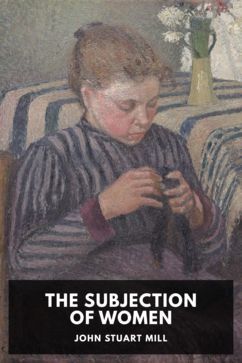
The Subjection of Women - John Stuart Mill
Let's be clear: this isn't a novel. There's no plot in the traditional sense. 'The Subjection of Women' is a sustained, logical argument. Published in 1869, John Stuart Mill sets out to prove one core idea: that the legal and social subordination of women to men is wrong, and it holds back all of human progress. He systematically tackles the beliefs of his day—that women are naturally less intelligent, that they belong in the home, that men are naturally suited to rule over them. He argues that what looks like 'nature' is actually the result of centuries of conditioning and a lack of education and opportunity.
The Story
Think of it less as a story and more as a courtroom drama where Mill is the lawyer for half the human race. He calls his first witness: history and observation. He points out that we can't know what women are truly capable of because they've never been free to try. He then cross-examines the opposition, dismantling arguments about women's supposed mental weakness or natural domesticity. His final plea is for justice and utility—a society where talent, not gender, determines a person's path is a stronger, richer, and happier society for everyone.
Why You Should Read It
I picked this up thinking it would be a dry historical document. I was wrong. Mill's passion is palpable. You can feel his frustration with the illogical arguments of his peers, and his personal respect for women (especially his wife, Harriet Taylor, who co-wrote it with him) shines through. The most gripping parts are when his logic meets a brick wall of tradition, and you see just how radical his ideas were. Reading it today is a mix of inspiration ('Yes! He gets it!') and a sobering reminder of how deeply these prejudices were rooted. It connects the dots from the 19th century to conversations we're still having.
Final Verdict
This book is perfect for anyone curious about the foundations of feminist thought, fans of persuasive essays, or readers who enjoy seeing a brilliant mind at work. It's not a light read, but it's a profoundly important one. If you've ever asked 'Why did it take so long for women to get the vote?' or wondered about the intellectual backbone of the suffrage movement, start here. It's the original blueprint.
You are viewing a work that belongs to the global public domain. You do not need permission to reproduce this work.